1

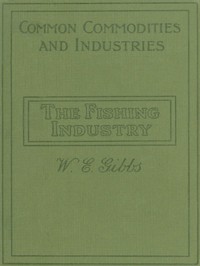
The Fishing Industry — Edition Insights
12
2
Project Gutenberg
2016
Fisheries -- Great Britain; Fisheries
Readers of public-domain and historical texts
Project Gutenberg digital edition
en
Edition facts
Words: 37,985
Reading time: 166 min
Text sections: 10
Source:
Project Gutenberg record #53447
Gibbs's 1916 volume in Pitman's Common Commodities series examines the British fishing industry through detailed descriptions of vessels, gear, and processing methods, with a focus on North Atlantic grounds like Georges Bank.
Editorial Edition Score
4.8/5
★★★★★
★★★★★
Calculated from edition completeness, EPUB availability, text structure and catalogue metadata. Not a user rating.
Edition quality
W. E. Gibbs's The Fishing Industry opens not with a preface but with advertisements for shipbuilders and brokers in Aberdeen and Hull, immediately grounding the reader in the commercial infrastructure of early twentieth-century British fisheries. Published in Pitman's Common Commodities series, the book treats fish as a commodity alongside tea, coal, and rubber, yet its excerpts reveal a granular focus on the physical processes of catching and preserving fish rather than on market economics. The catalog subjects list 'Fisheries -- Great Britain' and 'Fisheries' broadly, but the surviving text concentrates on North American grounds—Georges Bank, the Grand Banks—and on hand-line and trawl techniques, suggesting a transatlantic scope that the metadata alone does not convey.
Vessels and Gear: The Material Culture of Fishing
The excerpts devote considerable space to the design and operation of fishing vessels, particularly steam trawlers and dories. Advertisements for firms like Hall, Russell & Co. and W. A. Massey & Sons highlight the specialization of shipbuilding for North Sea, Icelandic, Newfoundland, and tropical fishing. The text describes dories rowing away from the mother ship 'in all directions, each man for himself,' a phrase that captures the solitary labor of hand-line fishing. Gear is specified in precise measurements: lines 13 feet long, hooks in pairs, bait of 'slack-salted clams obtained on the coast of Maine.' The emphasis on material details—from the triangular-section laths of drying flakes to the 8 bushels of salt per hogshead—reflects a technical manual's approach rather than a narrative of the industry's economic significance.
Sorting, Salting, and the Grading of Catch
Gibbs provides a meticulous account of how fish are sorted and processed aboard ship and on shore. Cod under 22 inches are set aside; smaller fish and 'shack'—pollack, haddock, cusk, hake—are counted separately. On returning to port, fish are pitchforked onto the wharf and sorted into snappers (under 16 inches from nape to tail), medium, and large, with percentages given: 4% snappers, 41% medium, 55% large. The salting process is described step by step: kenching, re-piling every two days, drying on latticework flakes under canvas awnings. The text notes that 'the extraction of water by the salt is assisted by kenching, the fish at the bottom of the kench being pressed down by the weight of those above.' Such detail suggests the book served as a practical reference for those involved in the trade, not merely a general survey.
Georges Bank and the Geography of the Fishery
Although the catalog subjects emphasize British fisheries, the excerpts focus heavily on the Georges Bank, southeast of Gloucester, Massachusetts. Gibbs reports that this area yields 'about 70 per cent of the total catch,' with the Grand and Western Banks accounting for the remaining 30 per cent. He notes that a single fisherman may take 500 fish in a day there, and that approximately 60 per cent of fish are brought in iced, 40 per cent salted. The text also mentions frozen herring as bait and the use of hand-lines from anchored vessels. This transatlantic perspective—detailing American fishing grounds and methods—broadens the book's scope beyond what the subject headings imply, possibly reflecting the interconnectedness of the North Atlantic fishery or the series' aim to cover commodities comprehensively.
Readers approaching The Fishing Industry should expect a technical, process-oriented account rather than a macroeconomic analysis. The excerpts suggest that Gibbs's work is strongest in its depiction of the physical labor and material flows of fishing—from hook to flake yard. The catalog subjects may understate the book's geographical range, which includes detailed treatment of North American fisheries. For those interested in the history of food production, the volume offers a snapshot of early industrial fishing practices, though the complete text would be needed to assess its treatment of British fisheries specifically.
Reader reflection
Record your reading impressions
A brief reflection can help important ideas stay with you longer.
Your progress
0
/
10
2
Was reading this book enjoyable?
3
How likely are you to recommend this book?
4
What was the reading difficulty like?
5
Did you gain anything practical from the text?
6
How personally connected did you feel to the book?
7
Which element worked best for you?
8
Was the book what you thought it would be?
9
What changed or sharpened your thinking?
10