1

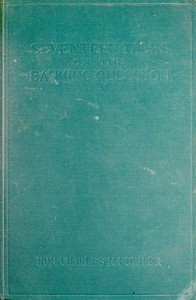
Seventeen Talks on the Banking Question Between Uncle Sam and Mr. Farmer, Mr. Banker, Mr. Lawyer, Mr. Laboringman, Mr. Merchant, Mr. Manufacturer — A Closer Reading
14
2
Project Gutenberg
2019
Currency question -- United States; Banks and banking -- United States
Readers of public-domain and historical texts
Project Gutenberg digital edition
en
Edition facts
Words: 169,447
Reading time: 737 min
Text sections: 17
Source:
Project Gutenberg record #60029
A series of 17 fictional conversations between Uncle Sam and six citizens, systematically exploring U.S. banking and currency reform through dialogue, historical examples, and a proposed legislative bill.
Editorial Edition Score
4.8/5
★★★★★
★★★★★
Calculated from edition completeness, EPUB availability, text structure and catalogue metadata. Not a user rating.
Edition quality
The book is structured as a sequence of 17 weekly dialogues, each night covering a distinct facet of banking and currency. Uncle Sam convenes six representatives—Farmer, Banker, Lawyer, Laboringman, Merchant, and Manufacturer—to debate and ultimately draft a new financial system. The conversational format allows Fowler to move from first principles, such as the standard of value, through historical precedents like colonial credit money and greenbacks, to detailed policy proposals. The talks are framed as confidential, encouraging frankness, and the participants are described as typical of average intelligence, suggesting an educational intent.
Dialogue as a Pedagogical Device
Fowler adopts a Socratic method, using question-and-answer exchanges to unpack complex economic concepts. For instance, the first night begins with Uncle Sam stating they will start with the “A, B, C of the subject.” This approach allows the author to introduce technical terms gradually, as when the group defines money, currency, and credit across multiple sessions. The recurring presence of Mr. Lawyer to “steer us clear of legal obstacles” and Mr. Laboringman to speak for toilers shows how each character represents a distinct perspective, making abstract issues concrete.
Movement from Theory to Legislation
The sequence of topics follows a deliberate arc: early nights establish foundational concepts (standard of value, money, currency), middle nights examine credit types and historical systems (colonial credit, greenbacks, reserves), and later nights shift to institutional design (the bank, clearing house, land credit bank). The final three nights present an outline of a bill, a draft of the bill, and a critique of the Aldrich Plan. This progression mirrors the group’s stated goal of reaching agreement and formulating a system, moving from analysis to actionable proposal.
Recurring Images of System and Structure
Throughout the excerpts, Fowler emphasizes order and mechanism. The Crédit Foncier of France is described with amortization tables and precise interest rates, illustrating a model of structured land credit. Uncle Sam’s call for a “comparatively simple organization with broad powers” reflects a preference for flexible, American-designed institutions over European red tape. The repeated mention of “reserves,” “clearing house,” and “debentures” reinforces the book’s focus on the machinery of finance, with each component scrutinized for its role in a coherent whole.
Historical Precedent as Argument
Fowler grounds his proposals in historical examples, particularly from the 19th century. The ninth night examines United States Notes (greenbacks), and the fourteenth night reviews “Banking in 1860.” These sections serve as cautionary tales or models, depending on the case. The detailed analysis of the Crédit Foncier—its loan terms, debenture types, and lottery prizes—offers a foreign benchmark. By contrasting European practices with American conditions, Fowler argues for adaptation rather than imitation, warning against “loading down our legislation with so much detail.”
Readers approaching this work should treat each talk as a self-contained lesson that builds toward a cumulative argument. The dialogue format rewards attention to how objections are raised and resolved, particularly the interplay between Mr. Farmer’s practical concerns and Mr. Banker’s institutional knowledge. Fowler’s reliance on historical and international comparisons invites scrutiny of whether his proposed bill truly addresses the weaknesses he identifies in existing systems.
Reader reflection
Before you leave, reflect on the book
Use these questions to collect your thoughts before moving on.
Your progress
0
/
10
2
What was your overall reaction to the book?
3
Would you recommend this book to another reader?
4
How much effort did this book require?
5
What was its emotional impact?
6
Did the book deliver what you hoped for?
7
Would a second reading be valuable?
8
Did the book give you something worth debating?
9
What did this book teach you most?
10