
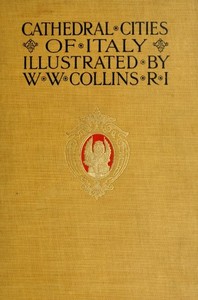
Cathedral Cities of Italy by W. W. Collins
Forget the dry, fact-heavy guidebooks of today. W. W. Collins's Cathedral Cities of Italy is a journey. Written over a century ago, it feels like you're wandering the cobblestone streets with a deeply knowledgeable, slightly poetic friend. The book doesn't have a plot in the traditional sense. Instead, its structure is a pilgrimage. Collins takes us city by city—from the grandeur of Rome and Milan to the hidden gems like Orvieto and Ravello. In each chapter, the local cathedral is our anchor. He describes its architecture, sure, but he's far more interested in its story. He talks about the bishops and bankers who funded it, the artists who decorated it, and the generations of townspeople who were baptized, married, and mourned within its walls.
Why You Should Read It
This book surprised me. I expected a dusty architectural catalog, but I found a vibrant social history. Collins has a gift for making stone feel alive. When he describes the facade of Siena's cathedral, you can almost feel the civic pride and rivalry with Florence that motivated its creation. He notices the small details: a worn step, a faded fresco, the way the light falls at a certain hour. His writing connects the spiritual purpose of these buildings with their very practical role as the center of medieval and Renaissance life. It’s this human connection that makes the book so compelling. You're not just learning about arches and domes; you're understanding the hopes, fears, and sheer ambition of the people who built a civilization around faith and beauty.
Final Verdict
This is the perfect book for a specific kind of dreamer. It's for the traveler who wants to look beyond the souvenir shop, the history lover who craves context over dates, and the art enthusiast who wants to know the 'why' behind the masterpiece. It’s also a beautiful, melancholic read for armchair travelers, offering a portrait of an Italy that has, in many ways, vanished. Be warned: it will absolutely fuel your wanderlust. Keep your laptop open for flight searches—you've been warned!
You are viewing a work that belongs to the global public domain. Use this text in your own projects freely.
Joseph Gonzalez
4 months agoGood quality content.







William Rodriguez
7 months agoThe citations provided are a goldmine for further academic study.